
Product Description
Description
This is a right-angle rotating gear driver, using aluminum alloy precision die-casting shell, suitable for the cock of ball valve and butterfly valve, it is driven by worm gear and has self-locking function, and adopts tapered roller bearing to make The operation of the gearbox is more convenient and efficient. The stem nut can be made into a CHINAMFG or separate structure according to customer requirements, and the mounting flange adopts the ISO5211 international standard, so it can be more easily installed with the valve. The overall protection level can reach IP67, and for some special environments, it canalso be made into IP68 level.
| NO. | Item | Material |
| 1 | Bolt | SS304 |
| 2 | Pointer | ABS resin |
| 3 | Cover | Aluminium |
| 4 | O-Ring | NBR70 |
| 5 | Pin | Steel black |
| 6 | Wom gear | Ductile iron |
| 7 | Rear seal | NBR 70 |
| 8 | Body | Aluminium |
| 9 | Adjusting bolt | Steel black |
| 10 | Adjusting bolt gasket | SS304 |
| 11 | Adjusting nut | SS304 |
| 12 | Adjusting nut sheath | NBR 70 |
| 13 | Bearing | Powder metallurgy |
| 14 | Worm | Carbon steel 45# |
| 15 | Front seal | NBR70 |
| 16 | Rotating shaft | SS304 |
| 17 | Hand wheel | Carbon steel polyster coating |
| 18 | Pin | Steel black |
| Model | HAM1(19070) | HAM2(19092) | HAM3(19102) | HAM4(19125) | HAM5(19140) | |
| Technical-parameters | ||||||
| Ratio | 40:01:00 | 37:01:00 | 36:01:00 | 36:01:00 | 50:01:00 | |
| Oitput torque(N.m) | 180 | 300 | 540 | 675 | 1500 | |
| Stemdia,d(mm) | 30 | 32 | 43 | 43 | 54 | |
| Mid-B-vaive(EPDM)DN | DN32-100 | DN100-200 | DN200-250 | DN250-350 | DN350-400 | |
| D-eccentric-B-valve(EPDM)DN | ||||||
| Weight(Kg) | 1.2 | 2 | 2.8 | 4.8 | 11 | |
| Connection-size | ||||||
| Flange dia-D(mm) | 80 | 100 | 120 | 142 | 175 | |
| PCD | D1(ISO5211) | 50/70 | 70/90 | 70/102 | 102/125 | 102/125/140 |
| 4-M6X10/4-M8X12 | 4-M8X12/4-M10X12 | 4-M8X10/4-M10X15 | 4-M8X10/4-M12X18 | 4-M8X10/4-M16X24 | ||
| S | 8/9/11/14/17 | 9/1l/14/17 | 17/19/22 | 19/22/24 | 22/24/27 | |
| 2-b | — | — | — | — | — | |
| R(deep) | — | — | — | — | — | |
| Appearance-size | ||||||
| L | 115 | 130 | 150 | 180 | 220 | |
| L1 | 50 | 58 | 65 | 80 | 95 | |
| L2 | 42 | 50 | 60 | 60 | 78 | |
| H | 48 | 58 | 58 | 74 | 84 | |
| H1 | 19 | 18 | 18 | 21 | 51 | |
| Handwheel | d1 | 20 | 20 | 20 | 20 | 25 |
| L3 | 160 | 160 | 215 | 225 | 325 | |
| W | 140 | 200 | 250 | 300 | 400 | |
1. Question:What is your main products?
Answer:Our main products are Pneumatic Actuators, Electric Actuators, Actuated Valves And Valve actuators Accessories..
2. Question:Are you a trader or manufacturer ?
Answer: We are the pneumatic actuators and electric actuators manufacturer , we have ability to do the customization products with experienced team, And we have own factory and production line.
3. Question:How do your make the quality guarantee for actuators?
Answer:We have our own quality control system for incoming and outgoing of the materials, every product will be under controlled and tested before delivery to our customer , and we also provide 18 months guarantee ,beside we provide technical supporting .
4. Question:When can I receive the Price of valve actuators ?
Answer:We will give the Quotation Within 24 hours after we get your inquiry .Or Your can call or message us if it’s quite urgently.
5. Question:How to order our pneumatic actuators and electric actuators ?
Answer:Please send us your inquiry by Email, , etc. we need to know the following informations before giving the formal Quotation.
1) Product information in details, Quantity, Other requirements
2) Delivery time required
6. Question:How can I get a sample to check your quality?
Answer:Contact with our sales expert to arrange the sample delivery. Please send us the details of the sample before placing the order.
7. Question:Shall we pay the sample cost and transportation cost ?
Answer:We will provide the sample by free of charge. Your will bear the freight cost.
8. Question:How long to prepare the sample ?
Answer:Most of our products are under regular production and some of them we keep in stocks.
9. Question:How to delivery the sample to our place?
Answer:Your can provide your forwarders contacts if any, or we will arrange it for you.
10. Question:What about the delivery date if we place the formal order ?
Answer:Usually it takes 15~20days on the production .We know that on-time delivery is very crucial to our customers to meet dead-lines.
We monitor and expedite our supply chain to ensure that we delivery our products to our customers on-time all the time.
| Application: | Motor |
|---|---|
| Function: | Change Drive Direction, Speed Changing |
| Layout: | Coaxial |
| Hardness: | Soft Tooth Surface |
| Installation: | Torque Arm Type |
| Step: | Double-Step |
| Samples: |
US$ 50/Piece
1 Piece(Min.Order) | |
|---|
| Customization: |
Available
| Customized Request |
|---|
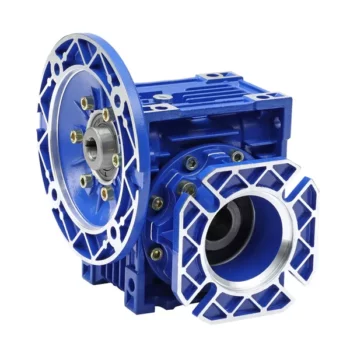
Self-Locking Properties in a Worm Gearbox
Yes, worm gearboxes exhibit self-locking properties, which can be advantageous in certain applications. Self-locking refers to the ability of a mechanism to prevent the transmission of motion from the output shaft back to the input shaft when the system is at rest. Worm gearboxes inherently possess self-locking properties due to the unique design of the worm gear and worm wheel.
The self-locking behavior arises from the angle of the helix on the worm shaft. In a properly designed worm gearbox, the helix angle of the worm is such that it creates a mechanical advantage that resists reverse motion. When the gearbox is not actively driven, the friction between the worm threads and the worm wheel teeth creates a locking effect.
This self-locking feature makes worm gearboxes particularly useful in applications where holding a load in position without external power is necessary. For instance, they are commonly used in situations where there’s a need to prevent a mechanism from backdriving, such as in conveyor systems, hoists, and jacks.
However, it’s important to note that while self-locking properties can be beneficial, they also introduce some challenges. The high friction between the worm gear and worm wheel during self-locking can lead to higher wear and heat generation. Additionally, the self-locking effect can reduce the efficiency of the gearbox when it’s actively transmitting motion.
When considering the use of a worm gearbox for a specific application, it’s crucial to carefully analyze the balance between self-locking capabilities and other performance factors to ensure optimal operation.
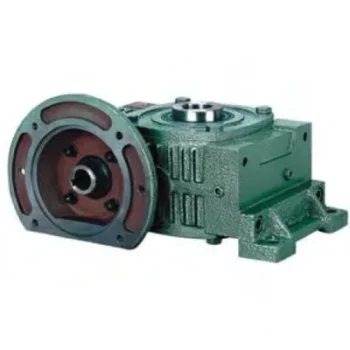
Worm Gearboxes in Conveyor Systems: Benefits and Considerations
Worm gearboxes play a crucial role in conveyor systems, offering several benefits and considerations for their effective integration:
- Space Efficiency: Worm gearboxes have a compact design, making them suitable for applications with limited space, such as conveyor systems.
- High Reduction Ratios: Worm gearboxes can achieve high reduction ratios in a single stage, allowing for slower conveyor speeds without sacrificing torque.
- Self-Locking: Worm gearboxes have inherent self-locking properties, preventing the conveyor from moving when the motor is not actively driving it.
- Directional Control: Worm gearboxes facilitate directional control, enabling the conveyor to move forward or reverse as needed.
- Low Noise: Worm gearboxes often produce lower noise levels compared to other gearbox types, contributing to quieter conveyor operation.
However, there are also considerations to keep in mind when using worm gearboxes in conveyor systems:
- Efficiency: Worm gearboxes may have lower mechanical efficiency compared to some other gearbox types, leading to energy losses.
- Heat Generation: Worm gearboxes can generate more heat due to sliding contact between the worm and gear, necessitating proper cooling mechanisms.
- Lubrication: Proper lubrication is critical to prevent wear and ensure efficient operation. Regular maintenance is required to monitor lubrication levels.
- Load and Speed: Worm gearboxes are well-suited for applications with high torque and low to moderate speed requirements. They may not be optimal for high-speed conveyors.
Before integrating a worm gearbox into a conveyor system, it’s important to carefully consider the specific requirements of the application, including load, speed, space constraints, and efficiency needs. Consulting with gearbox experts and manufacturers can help ensure the right choice for the conveyor’s performance and longevity.
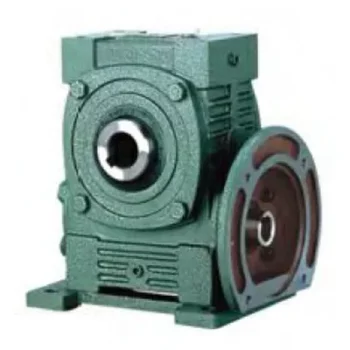
How to Select the Right Worm Gearbox for Your Application
Selecting the right worm gearbox for your application involves careful consideration of various factors:
- Load Requirements: Determine the torque and load requirements of your application to ensure the selected gearbox can handle the load without compromising performance.
- Speed Reduction: Calculate the required gear reduction ratio to achieve the desired output speed. Worm gearboxes are known for high reduction ratios.
- Efficiency: Consider the gearbox’s efficiency, as worm gearboxes typically have lower efficiency due to the sliding action. Evaluate whether the efficiency meets your application’s needs.
- Space Constraints: Assess the available space for the gearbox. Worm gearboxes have a compact design, making them suitable for applications with limited space.
- Mounting Options: Determine the mounting orientation and configuration that best suits your application.
- Operating Environment: Consider factors such as temperature, humidity, and exposure to contaminants. Choose a gearbox with appropriate seals and materials to withstand the environment.
- Backlash: Evaluate the acceptable level of backlash in your application. Worm gearboxes may exhibit more backlash compared to other gear types.
- Self-Locking: If self-locking capability is required, confirm that the selected gearbox can prevent reverse motion without the need for external braking mechanisms.
- Maintenance: Consider the maintenance requirements of the gearbox. Some worm gearboxes require periodic lubrication and maintenance to ensure proper functioning.
- Cost: Balance the features and performance of the gearbox with the overall cost to ensure it aligns with your budget.
Consult with gearbox manufacturers or experts to get recommendations tailored to your specific application. Testing and simulations can also help validate the suitability of a particular gearbox for your needs.


editor by CX 2023-10-17