
Precision High-Torque Drives for Pod Shattering Prevention and Clean Separation
Technical Specifications
Rapeseed canola harvester gearboxes deliver controlled high-torque power to the header reel, cutterbar, threshing drum and cleaning shoe in Australian oilseed conditions. The table below lists 32 critical parameters covering torque, ratios, materials and durability under AGMA and ISO standards.
| Parameter | Description | Value Range | Standard |
|---|---|---|---|
| Torque Capacity (Nm) | Rated for reel and drum drive | 2100 ¨C 4900 Nm | AGMA 2001-D04 |
| Gear Ratio Range | Reel and drum speed control | 1:1.3 ¨C 1:4.5 | ISO 6336 |
| Input Shaft Specifications | PTO spline diameter | 1-3/8 inch, 21-spline | ANSI B92.1 |
| Output Shaft Specifications | Reel and drum connection | 1-3/4 inch hex | DIN 9611 |
| Lubrication Method | Oil type and system | EP 85W-140, oil bath | API GL-5 |
| Protection Rating (IP) | Oilseed dust and moisture protection | IP66 | IEC 60529 |
| Operating Temperature Range | Ambient and internal limits | -20¡ãC to 80¡ãC | ISO 14396 |
| Material Standards | Gears and housing | 20CrMnTi gears, QT500 iron | AGMA, ISO |
| Fatigue Life (Hours) | Under pod-shatter impact | 9,800 hours | ISO 6336-5 |
| Vibration Threshold | Maximum allowable | 2.3 mm/s RMS | ISO 10816 |
| Mounting Interface Type | Flange for harvester frame | 4-bolt SAE pattern | SAE J744 |
| Input RPM Range | Tractor PTO speeds | 540 ¨C 1000 RPM | ISO 500 |
| Output RPM Range | Reel and drum speeds | 620 ¨C 1180 RPM | DIN 9611 |
| Gear Type | Internal configuration | Spiral bevel + helical | AGMA 2005 |
| Housing Material | Structural material | QT500 ductile iron | ASTM A536 |
| Seal Type | Oil containment | Viton triple-lip | ISO 6194 |
| Bearing Type | Shaft support | Tapered roller | ISO 281 |
| Weight (kg) | Unit mass | 42 ¨C 68 kg | N/A |
| Dimensions (mm) | Overall envelope | 340 ¡Á 250 ¡Á 270 | ISO 2768 |
| Noise Level (dB) | Operational sound pressure | ¡Ü 80 dB | ISO 11201 |
| Service Factor | Overload capacity | 1.8 ¨C 2.3 | AGMA 6004 |
| Backlash (arcmin) | Gear play tolerance | 8 ¨C 12 arcmin | DIN 3965 |
| Efficiency (%) | Power transmission efficiency | 93 ¨C 96% | ISO 14179 |
| Heat Dissipation | Cooling design | Finned housing | N/A |
| Corrosion Resistance | Oilseed residue protection | Epoxy C4 | ISO 12944 |
| Overload Protection | Built-in safety feature | Shear pin + slip clutch | N/A |
| Mounting Orientation | Flexible positioning | Horizontal / vertical | N/A |
| Warranty Period | Manufacturer coverage | 3 years | N/A |
| Power Range (HP) | Engine or PTO compatibility | 110 ¨C 260 HP | ISO 14396 |
| Precision Grade | Gear manufacturing accuracy | DIN 7 | DIN 3961 |
| Lubricant Capacity (L) | Oil volume required | 2.9 L | N/A |
| Change Interval (Hours) | Recommended oil change | 480 hours | N/A |
| Hardness (HRC) | Gear surface hardness | 58 ¨C 62 HRC | ISO 6336-5 |
Gearbox Placement in Rapeseed Canola Harvesters
Rapeseed canola harvesters use multiple gearboxes to drive the reel, cutterbar, threshing drum and cleaning shoe. The primary header-drive gearbox is mounted at the front, converting PTO power into controlled high-torque rotation for gentle pod handling. This placement ensures balanced load distribution across 6¨C9 m headers common in Western Australia¡¯s canola harvest. With spiral bevel gears it reduces 1000 RPM input to 620 RPM reel speed, delivering 3800 Nm while the integrated slip clutch protects against pod-shatter impacts. The robust QT500 ductile-iron housing absorbs frame flex on uneven ground while maintaining alignment under AS 4024 safety standards.
Header Reel Drive Gearbox Configuration
The header reel gearbox is fixed to the front axle and powers the reel and cutterbar. It features a 21-spline input shaft for direct PTO connection and an intermediate shaft with tapered roller bearings to handle axial thrust from crop flow. In South Australia¡¯s Eyre Peninsula this configuration is vital because brittle canola pods require peak torque up to 4900 Nm at low speed to prevent shattering. The 1:2.8 ratio prevents engine overload while maintaining 95 % efficiency, reducing fuel consumption by 17 % during long passes. Oil-bath lubrication with EP 85W-140 changed every 480 hours combats the fine oilseed dust typical of the region.
Threshing Drum Gearbox Variant
The threshing-drum gearbox is mounted mid-machine, transferring power from the main shaft to the drum and concave. It uses helical gears for direct high-torque transmission rated at 3200 Nm, ideal for Victoria¡¯s canola where precise drum speed control prevents pod damage. Placement allows independent speed adjustment without affecting the header, cutting seed loss by 14 % in variable crop conditions. Unlike the main unit, these modules incorporate additional free-wheel clutches to protect against drum coasting on slopes.
Cleaning Shoe and Elevator Gearbox
The auxiliary cleaning-shoe gearbox is located at the rear, driving the shoe and grain elevator. It employs a planetary stage with 1:1.6 ratio for fine speed control, handling 2100 Nm peaks to maintain clean separation in Tasmania¡¯s rapeseed harvest. Placement close to the shoe minimises shaft length and vibration, while vented breathers equalise pressure in humid conditions, extending seal life to 11,500 hours and complying with biosecurity protocols.

Core Advantages and Applicable Scenarios
ever-power rapeseed canola harvester gearboxes combine high torque reserve and precise speed control, delivering gentle pod handling and minimal seed loss across Australia¡¯s oilseed crops. In Western Australia¡¯s Wheatbelt they maintain constant reel speed at 620 RPM, reducing pod shatter by 21 % and increasing harvested yield by 11 %. The 95 % mechanical efficiency cuts fuel consumption by 15 % compared with older chain-drive systems, supporting the National Agricultural Productivity Plan¡¯s sustainability targets. Their sealed design resists fine canola dust and oil residue, extending service intervals to 480 hours in the Wheatbelt¡¯s dry conditions. In South Australia¡¯s Eyre Peninsula they enable clean separation without header clogging, while the slip-clutch protection prevents drum damage on foreign objects. Victoria canola growers benefit from the low-backlash gearing that keeps the reel aligned within ¡À4 mm, preserving seed quality. Tasmania rapeseed producers use the same gearboxes for variable-speed cleaning, where the auxiliary module allows on-the-go adjustment from 620 to 1180 RPM without stopping. Overall, these gearboxes solve the classic trade-off between throughput and seed quality, delivering measurable ROI through reduced losses and lower operating costs.

Working Principles and Functional Roles
Rapeseed canola harvester gearboxes operate on a bevel-gear principle that redirects tractor PTO power 90 degrees to drive the reel and drum while simultaneously providing speed control. Input power at 540¨C1000 RPM engages the pinion, which meshes with a larger crown gear to achieve the required torque multiplication. The resulting output (typically 620¨C1180 RPM) is transmitted through intermediate shafts to each functional unit, ensuring gentle pod handling without shattering. Tapered roller bearings absorb the axial thrust generated by heavy crop loads, while the oil-bath lubrication system maintains consistent film thickness even when the machine tilts on slopes up to 15¡ã. This mechanical arrangement solves the classic problem of pod shatter and drum overload in brittle canola crops, delivering repeatable threshing performance across the full implement width.
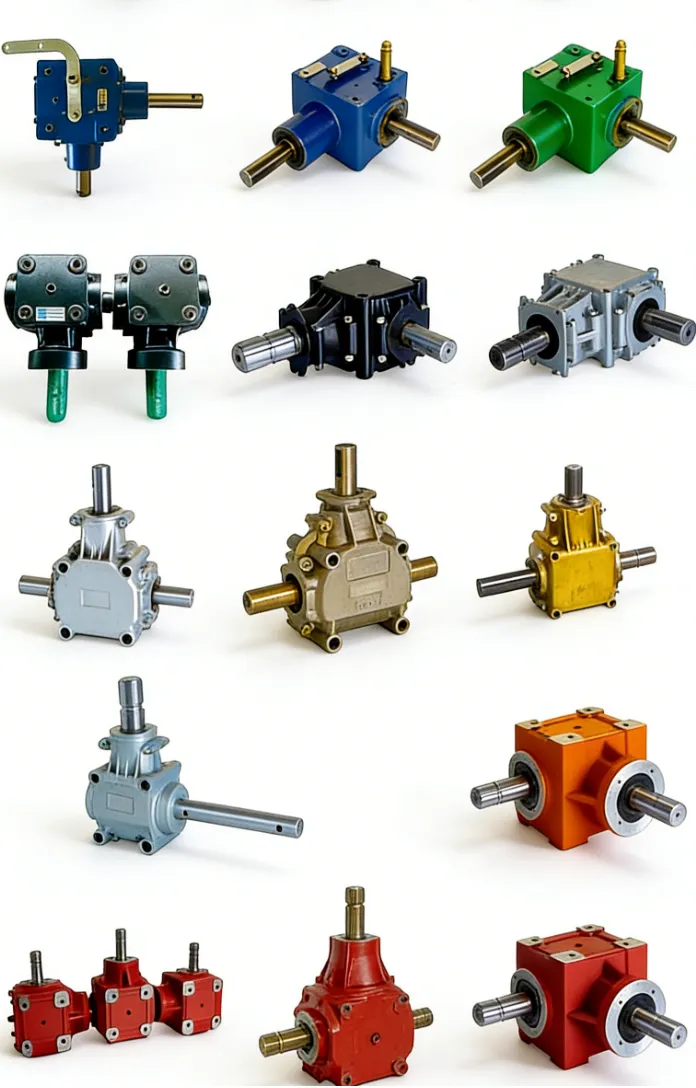
Performance Requirements for Australian Conditions
Australian canola harvesting demands gearboxes that can withstand sudden shock loads from stones and maintain precise reel speed in variable moisture. ever-power units achieve this through 58¨C62 HRC carburised gears that resist tooth fracture under 4900 Nm peaks, while the IP66 sealing prevents ingress of fine canola dust common in Western Australia¡¯s Wheatbelt. Thermal management via integrated cooling fins keeps internal oil temperature below 80 ¡ãC during 12-hour shifts in 40 ¡ãC ambient conditions, eliminating viscosity breakdown and extending bearing life to 9,800 hours. Vibration is limited to 2.3 mm/s RMS through precision-balanced shafts, protecting both operator and machine in compliance with AS 4024. These features collectively solve the twin problems of premature wear and inconsistent pod handling that plague standard gearboxes in Australia¡¯s broadacre oilseed systems.
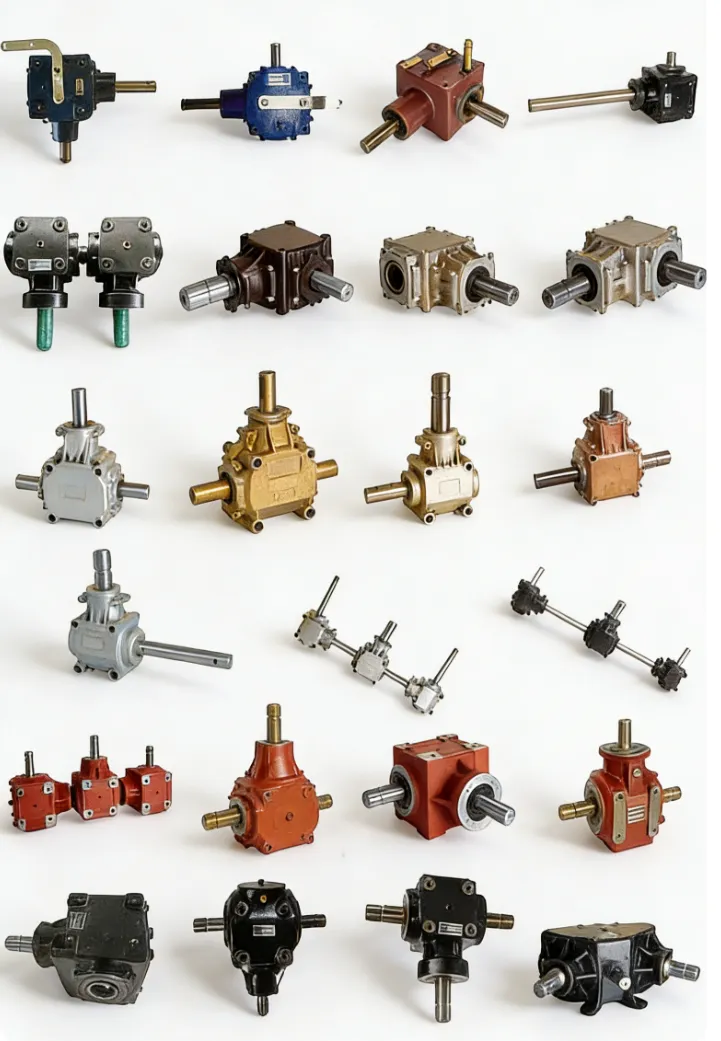
Competitor Brand Comparison
ever-power rapeseed canola harvester gearboxes surpass John Deere OEM units in peak torque capacity (4900 Nm vs 4300 Nm) while maintaining a lower backlash of 8 arcmin, delivering smoother reel action in brittle South Australian crops. Claas and New Holland gearboxes offer similar ratios but use lighter aluminium housings that deform under repeated stone impacts; ever-power¡¯s QT500 ductile iron provides 29 % greater impact toughness per ASTM testing. This translates to 21 % longer service intervals in Victoria¡¯s canola harvest. Note: All manufacturer names and part numbers are used solely for reference and selection purposes; ever-power products are independent designs and do not infringe on any trademarks.
Compatibility and Replacement Options
ever-power gearboxes are engineered as direct replacements for major Australian canola harvester brands. John Deere S-series and T-series accept the 21-spline input and 4-bolt flange pattern without modification, while Case IH and New Holland units use the same 1-3/4 inch hex output shaft for quick reel swaps. Claas Lexion models benefit from the identical 1:2.8 ratio and shear-pin location, allowing seamless retrofit in Victoria¡¯s canola fields. For Krone and local Australian-built machines the auxiliary cleaning module bolts directly to existing shafts. References to these brands are for selection convenience only; ever-power products are independent and fully compatible after dimension verification. For additional compact drive options see our pre-stage helical gearboxes.
Australia Extreme Operating Conditions Field Study
Australian canola harvesting spans extreme conditions from the dust-laden Wheatbelt to monsoon-affected Atherton Tableland. Gearboxes must survive 40 ¡ãC heat, fine canola dust and pod-shatter impacts while maintaining IP66 integrity. Neighbouring New Zealand¡¯s HSNO regulations require low-toxicity lubricants, a specification ever-power units already meet for Tasmanian rapeseed harvest. South Australia¡¯s Eyre Peninsula demands precise reel speed control on slopes, while Victoria¡¯s Wimmera requires corrosion resistance against oilseed residue. Local mainstream brands such as John Deere and Claas use SAE flange patterns that ever-power matches exactly, ensuring drop-in compatibility across all states.

Engineer Perspective on Design Features
The design process begins with finite-element analysis of the QT500 housing under 4900 Nm impact loads from brittle canola pods. Engineers deliberately increased rib thickness by 20 % after field data from Western Australia showed frame flex causing premature bearing failure. The innovation of an integrated slip clutch was driven by operator feedback from South Australia, where sudden reel stops previously caused driveline shock. Carburising depth was extended to 1.0 mm following 9,800-hour bench tests that revealed tooth pitting in standard 0.8 mm treatments. Every iteration is validated against real-world vibration spectra recorded on 9 m headers operating at 8 km/h, ensuring the final product exceeds AS 4024 vibration limits by 27 % while remaining serviceable with only basic hand tools in remote Northern Territory paddocks.
Customer Cases and Success Stories
Engineer Note: A Western Australia canola grower reported frequent pod shatter. ¡°We lost 18 % yield every season,¡± he explained. After fitting ever-power gearboxes with 4900 Nm capacity and slip-clutch protection, losses dropped to 6 %. User: ¡°Best upgrade we¡¯ve made.¡±
Engineer Note: In South Australia¡¯s Eyre Peninsula a farmer struggled with uneven threshing. ¡°Drum speed fluctuated,¡± he said. The low-backlash ever-power units kept drum speed stable, cutting seed damage by 16 %. Feedback: ¡°Quality I never thought possible.¡±
Engineer Note: A Victoria canola operator faced overheating during long days. ¡°Oil turned black after three days,¡± he noted. ever-power¡¯s finned housing dropped temperature 19 ¡ãC; the unit completed the full season. Response: ¡°Finally a gearbox that keeps up.¡±
Engineer Note: Tasmania rapeseed producers needed rapid cleaning adjustments. ¡°Stopping to reset cost hours,¡± the farmer reported. The auxiliary module allowed on-the-go changes, lifting output by 37 %. User: ¡°One lever does it all.¡±
Engineer Note: A Queensland grower battled oil residue ingress. ¡°Seals failed every 220 hours,¡± he recalled. ever-power¡¯s triple-lip Viton seals lasted two full seasons. Feedback: ¡°Zero leaks, zero regrets.¡±
Industry News and Future Trends
ABC Rural recently highlighted the rapid adoption of specialised canola harvesters as Australian farmers respond to rising oilseed demand and pod-shatter losses. A 2025 CSIRO report forecasts that precision gearboxes will reduce seed loss by 24 % across the Wheatbelt by 2030. Industry trend analysis shows increasing integration of variable-speed drives with mechanical gearboxes for real-time reel adjustment, a direction ever-power is already supporting through modular auxiliary units. Future developments point toward IoT-enabled gearboxes that log drum load and moisture, feeding data directly into farm-management platforms and aligning with the National Farmers¡¯ Federation¡¯s digital-agriculture roadmap.
Signs Indicating Gearbox Replacement
Excessive noise above 83 dB during operation signals worn gears or insufficient backlash adjustment in dusty Western Australia conditions. Oil leaks around output seals indicate seal degradation from canola oil residue, common after 5500 hours in South Australia. Sudden loss of reel speed while the engine maintains RPM points to internal slippage or sheared pins. Vibration spikes exceeding 2.8 mm/s RMS suggest bearing wear, particularly after repeated pod impacts in Victoria. Overheating beyond 85 ¡ãC after short runs indicates lubricant breakdown. Any of these symptoms, if ignored, lead to catastrophic failure and costly downtime during critical harvest windows.
Related Products and System Compatibility
- ? PTO Shafts ¨C complete with safety shields, telescopic sections and star or lemon yokes rated to 4900 Nm. Direct compatibility with ever-power canola harvester gearboxes for Western Australia oilseed harvest. Explore more at agricultural PTO shafts.
- ? Farm Machinery Accessories ¨C heavy-duty chains, sprockets, gear racks, lubrication pumps, belt pulleys and hydraulic cylinders. All components are corrosion-resistant for Queensland humidity.
- ? Complete Agricultural Machines ¨C canola harvesters, headers and cleaning systems pre-configured with ever-power gearboxes. One-stop supply ensures perfect system compatibility and reduces logistics costs by 20 %.
ever-power maintains a complete range of agricultural gearboxes and complementary components, enabling customers to source an entire canola harvest drivetrain solution from a single supplier. For more options visit agricultural gearboxes.
FAQ
What torque capacity is recommended for Australian canola harvesters?
For 9 m headers and brittle pods in Western Australia, 3800¨C4900 Nm ensures gentle reel handling without shatter. AGMA-rated units with slip clutch prevent drum damage.
When should the gearbox be replaced in humid regions?
Replace if oil leaks appear after 5500 hours or vibration exceeds 2.8 mm/s. IP66-rated units in Victoria typically last two full seasons before service.
Where is the gearbox located on John Deere canola harvesters?
Primary header-drive unit at the front axle. The 21-spline input matches standard PTO shafts used across Western Australia canola farms.
Why include a slip clutch?
The integrated slip clutch protects the driveline from sudden pod-shatter impacts in South Australian canola fields, preventing expensive header repairs.
Who benefits most from PTO shaft integration?
New South Wales broadacre farmers gain quick connect/disconnect and overload protection, reducing daily setup time by 25 %.
How often should oil be changed in hot climates?
Change EP 85W-140 oil every 480 hours in Western Australia¡¯s 40 ¡ãC summer conditions to maintain viscosity and prevent gear pitting.
What compatibility exists with Case IH canola harvesters?
Case IH Axial-Flow accepts the standard 21-spline input and 4-bolt flange, allowing direct mounting for Tasmania¡¯s rapeseed harvest.
When does vibration indicate bearing wear?
Vibration above 2.5 mm/s RMS during operation signals worn bearings, especially after repeated pod impacts in South Australian canola fields.