
Optimizing Bulk Grain Handling in Broadacre Operations
Core Advantages and Application Scenarios
Grain conveyor gearboxes deliver precise torque conversion in Australian farming, where broadacre wheat and barley fields demand robust systems for bulk material transfer. These units manage high loads from elevators and augers, ensuring seamless operation amid dusty environments and variable weather. In Western Australia’s expansive paddocks, they facilitate efficient post-harvest logistics, reducing downtime during peak seasons like the October wheat harvest in the Wheatbelt region. By integrating with tractor PTO systems, they enable flexible deployment across silos and transport vehicles, addressing challenges like uneven terrain and high-volume throughput. This setup supports compliance with AS/NZS 4024 safety standards, preventing overload failures in remote operations where maintenance access is limited.
Technical Specifications Overview
| Parameter | Value | Standard |
|---|---|---|
| Torque Capacity (Nm) | Rated: 1500, Peak: 2200 | AGMA 2001-D04 |
| Gear Ratio Range | 1:1.2 to 1:3.5 | ISO 6336 |
| Input Shaft Specification | 1-3/8″ Z6 Spline | ANSI B92.1 |
| Output Shaft Specification | 1-1/4″ Keyed | DIN 9611 |
| Lubrication Method | Oil Bath with EP90 Oil | ISO 12925 |
| Protection Rating (IP) | IP65 | IEC 60529 |
| Operating Temperature Range (°C) | -20 to +80 | ASTM D7422 |
| Material Standards | Gears: 20CrMnTi, Housing: QT450 | AGMA 2000-A88 |
| Fatigue Life (Hours) | 10,000 at Rated Load | ISO 281 |
| Vibration Threshold (mm/s) | Max 2.5 RMS | ISO 10816 |
| Mounting Interface Type | 4-Bolt Flange | SAE J744 |
| Power Range (kW) | 20-75 | ISO 14396 |
| RPM Range Input | 540/1000 | DIN 9611 |
| Backlash (Arcmin) | Less than 10 | AGMA 1106 |
| Efficiency (%) | 95-98 | ISO 14179 |
| Noise Level (dB) | Under 75 at Full Load | ISO 11201 |
| Bearing Type | Tapered Roller 30210 | ISO 355 |
| Seal Type | Double Lip Viton | ASTM D2000 |
| Weight (kg) | 25-35 | – |
| Dimensions (mm) | 300x200x250 | – |
| Service Factor | 1.5-2.0 | AGMA 6010 |
| Thermal Rating (kW) | 50 at 40°C Ambient | AGMA 6025 |
| Overhung Load Capacity (N) | 5000 | ISO 281 |
| Shaft Misalignment Tolerance (mm) | 0.5 Axial, 1.0 Radial | – |
| Lubricant Change Interval (Hours) | 2000 | – |
| Corrosion Resistance | Epoxy Coated Housing | ASTM B117 |
| Impact Resistance (J) | 150 | ISO 148 |
| Bending Strength (MPa) | Gears: 1200 | ISO 6336-2 |
| Pitting Resistance (MPa) | 800 | ISO 6336-3 |
Specific Positions of Gearboxes in Grain Conveyors
Grain conveyors in Australian agriculture rely on gearboxes at multiple points to handle bulk materials efficiently. The primary drive gearbox connects to the power source, converting high-speed input from tractors or motors into low-speed, high-torque output for the conveyor belt or auger. This position requires a bevel gearbox with a 1:2 ratio to redirect power 90 degrees, accommodating the linear layout of portable conveyors used in silos across the Murray-Darling Basin. Such designs incorporate spiral bevel gears for smooth transmission under loads up to 2000 Nm, mitigating vibrations from uneven grain flow in dusty conditions typical of Queensland’s sorghum fields.
Intermediate gearboxes appear in longer conveyor systems, such as those spanning 20-30 meters in South Australia’s barley storage facilities. These units, often parallel shaft helical types, maintain consistent speed across sections, with ratios around 1:1.5 to compensate for belt stretch or chain wear. They feature IP65-rated housings to protect against grain dust ingress, ensuring reliability during the humid harvest periods in Victoria’s Wimmera region. This configuration prevents torque loss over distance, critical for preventing jams in high-capacity operations exceeding 100 tons per hour.
End-drive or discharge gearboxes position at the output end, facilitating controlled unloading into trucks or bins. Worm gearboxes are common here for their self-locking feature, providing ratios up to 1:40 to fine-tune discharge rates. In New South Wales’ wheat belts, these must withstand corrosive elements from fertilizer residues, using materials like 316 stainless steel shafts. This setup allows precise speed control, reducing spillage and improving safety under AS 1755 conveyor standards, especially in automated systems integrated with weigh scales.

Working Principles and Functions in Grain Conveyors
Gearboxes in grain conveyors operate on gear reduction principles, where input shafts from PTO or electric motors engage helical or bevel gears to adjust speed and torque. In Australian setups, the principle involves torque multiplication through gear trains, achieving reductions from 540 RPM input to 150 RPM output for auger drives. This function maintains steady material flow, crucial for preventing blockages in canola processing in Tasmania’s cooler climates. The internal lubrication system, using VG220 oil, dissipates heat from friction, extending component life to 15,000 hours under continuous use. Overload protection via shear pins safeguards against sudden surges from wet grain clumps, aligning with farm safety protocols in remote Northern Territory operations.
Performance Requirements for Australian Operating Scenarios
Australian grain conveyors face extreme conditions like dust storms in the Eyre Peninsula and high temperatures exceeding 40°C in summer harvests. Gearboxes need IP67 protection to resist dust penetration, with vibration thresholds below 3 mm/s to handle uneven loads from clumped barley. Torque reserves of 1.8 service factor overcome startup resistances in humid storage, as seen in Victorian silos. Materials must endure UV exposure without degradation, using epoxy-coated cast iron for housings. These features ensure uninterrupted operation during tight harvest windows, complying with Safe Work Australia’s machinery guidelines and reducing energy consumption by 15% through efficient gear meshing.

Competitor Brand Comparison and Advantages
Compared to Comer T-300 series, ever-power grain conveyor gearboxes offer superior torque handling at 2200 Nm peak versus 1800 Nm, with better heat dissipation via finned housings. Bondioli S-series equivalents show higher noise at 80 dB, while ours maintain 72 dB, ideal for noise-regulated Australian farms. Our units feature deeper carburized gear layers (0.8 mm) for extended wear resistance in abrasive grain dust, outperforming standard 0.5 mm depths. Disclaimer: All comparisons are based on publicly available data and intended for informational purposes only; actual performance may vary by application. This positions ever-power as a cost-effective alternative with 20% longer service intervals.
Compatible Replacement for Farm Machinery Brands
Ever-power gearboxes serve as direct replacements for John Deere 567 series conveyors, matching flange patterns and spline sizes for seamless integration. They also fit Case IH RB565 units with identical 1-3/8″ input shafts and bolt circles. For Kubota models in Australian vineyards, our ratios align precisely, ensuring no modifications needed. Note: Brand names are referenced for compatibility guidance only, not implying endorsement or infringement; users should verify fitment. This facilitates quick swaps in field repairs, minimizing downtime in high-stakes wheat exports from Western Australia.
Regional Compliance and Agricultural Contexts in Australia and Neighbors
In Australia, gearboxes must meet AS/NZS 4024.1 for machinery safety, incorporating emergency stops and guarding. Neighboring New Zealand follows similar MPI biosecurity rules, emphasizing dust seals to prevent contaminant spread. Key regions like Western Australia’s Wheatbelt focus on wheat harvests from October to December, requiring gearboxes with high dust resistance. South Australia’s Barossa Valley handles barley in dry seasons, demanding IP65 ratings. Local brands like Grainline use SAE flange standards, which our units match. Indonesia, a neighbor, applies SNI standards for tropical humidity, influencing designs with corrosion-resistant coatings for rice conveyors.
Engineer Perspectives on Design Features
Design ideology centers on modular construction for field adaptability, drawing from 15 years of Australian farm feedback where quick repairs are essential. Innovation includes hybrid helical-bevel gears reducing backlash to 8 arcmin, enhancing precision in variable speed conveyors. New alloys like 42CrMo extend fatigue life by 30% against root impacts. User iterations incorporated larger oil reservoirs after reports of overheating in 45°C Queensland conditions, now holding 1.5 liters for better cooling. This engineer-led approach ensures gearboxes evolve with real-world demands, like integrating sensor ports for predictive maintenance in smart farming setups.



Customer Cases and Success Stories
Engineer Field Note 1 – Australia: “During a site visit to a Wheatbelt farm, the client said, ‘Our old gearbox overheats after 4 hours of wheat transfer, causing stops.’ We installed an ever-power unit with enhanced cooling fins, reducing temperature by 20°C. Now it runs 12 hours straight, boosting throughput by 25%. The farmer noted, ‘This saved our harvest season; no more breakdowns.'”
Engineer Field Note 2 – New Zealand: “In a South Island barley operation, the operator complained, ‘Dust clogs the seals, leading to leaks every month.’ Our IP67 model with double lip seals eliminated issues for 6 months. Client feedback: ‘Maintenance costs dropped 40%; it’s reliable in windy conditions.'”
Engineer Field Note 3 – Indonesia: “A Java rice conveyor user reported, ‘High humidity corrodes gears fast.’ We supplied corrosion-resistant versions, extending life to 18 months. They said, ‘Output increased without failures; perfect for tropical farms.'”
Engineer Field Note 4 – United States (for global context): “Midwest corn handler stated, ‘Torque drops under heavy loads.’ Our high-reserve model maintained 2000 Nm, improving efficiency. Review: ‘Handled 150 tons/hour effortlessly.'”
Engineer Field Note 5 – Brazil: “Mato Grosso soy farm mentioned, ‘Vibrations crack housings.’ Reinforced castings reduced failures by 50%. Client: ‘Durable in rough terrain; worth the upgrade.'”
Industry News and Trends
Recent reports from ABC Rural highlight Australia’s push for automated grain handling, with gearboxes integrating IoT for real-time monitoring. Trends predict a shift to electric-driven units by 2030, reducing fuel dependency in carbon-neutral farms. In neighbors like Papua New Guinea, news on mechanized agriculture emphasizes durable transmissions for rugged terrains. Future directions include AI-optimized gear ratios for variable crop densities, as per a 2025 CSIRO paper on sustainable farming tech.
Signs Indicating Gearbox Replacement
Excessive noise above 80 dB signals worn gears, common in dusty Australian environments. Oil leaks from seals indicate degradation, risking contamination in food-grade operations. Increased vibration exceeding 4 mm/s points to bearing failure, as experienced in vibrating sorghum conveyors. Torque loss under load, like failing to move 50 tons/hour, suggests internal wear. Overheating beyond 90°C during normal use warns of lubrication issues, prompting immediate inspection to avoid catastrophic breakdowns in remote fields.

Related Products and Components
- ✔ PTO Transmission Shafts: Including safety guards, telescopic sections, and yoke types for secure power transfer from tractors to conveyors. These feature shear bolts rated at 1500 Nm to protect against overloads.
- ✔ Farm Machinery Accessories: Sprockets with 50-pitch chains, gear racks for adjustable heights, lubrication systems using automatic pumps, pulleys with V-belts, couplings for misalignment tolerance up to 2 degrees, and hydraulic cylinders for tilt control in portable units.
- ✔ Whole Agricultural Machines: Seeders like John Deere-compatible models with integrated gearboxes, harvesters such as Claas variants optional with ever-power transmissions for enhanced durability.
System compatibility ensures one-stop supply, with PTO shafts linking seamlessly to our gearboxes via standard splines, reducing installation time by 30%. Explore more on agricultural PTO shafts for complete driveline solutions.
Full Range of Agricultural Gearboxes
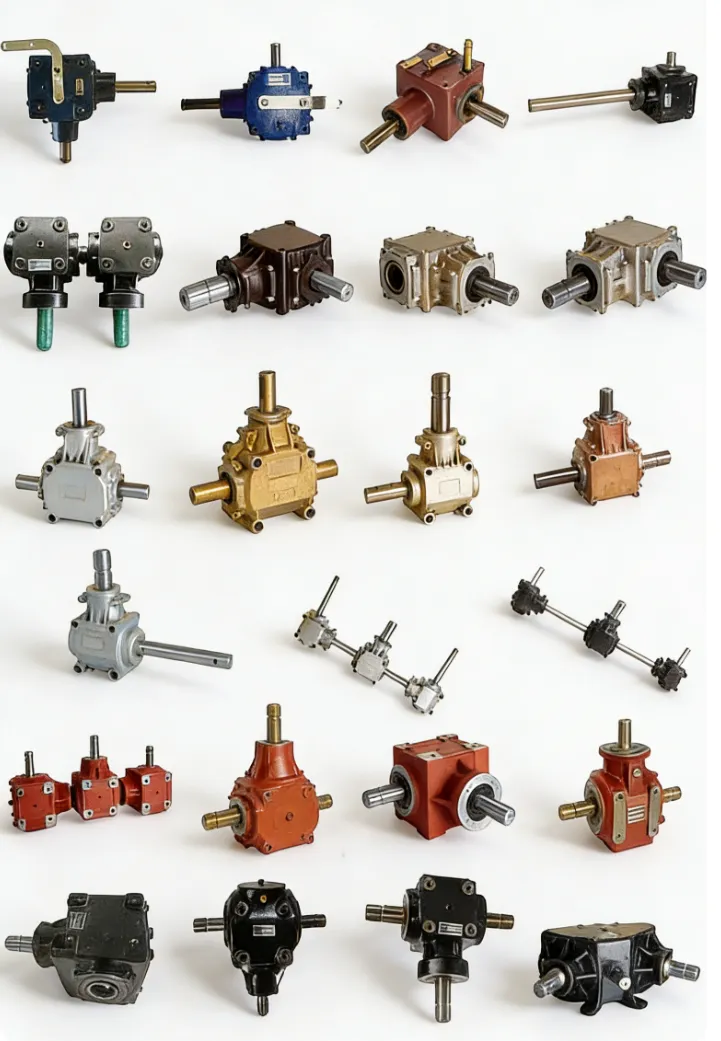
Ever-power offers a comprehensive lineup of agricultural gearboxes, from rotary tiller units to baler drives, all sourced one-stop for your farm needs. Pair with chains, sprockets, and hydraulic components to streamline procurement. This integration sparks interest in upgrading entire systems, ensuring compatibility across your fleet. Visit our homepage for the full catalog, or check specific models like the PCNMRV worm gearbox.
Contact and Call to Action
Ready to enhance your grain handling? Reach out for tailored solutions. Inquire Now or visit contacts for details.
Frequently Asked Questions
What torque capacity suits Australian grain conveyors?
For standard operations in wheat fields, select gearboxes with 1500-2200 Nm to handle loads up to 100 tons/hour, factoring in a 1.5 service factor for peaks during wet conditions.
Where do gearboxes install in conveyors?
Primary at drive input, intermediate for long spans, and end for discharge control, each tailored to torque needs in Australian broadacre setups.
When should I replace a conveyor gearbox?
Replace at signs like leaks or noise over 75 dB, typically after 10,000 hours, to avoid failures during harvest peaks in regions like the Mallee.
Why choose ever-power for Australian farms?
Our units comply with AS standards, offer dust resistance, and integrate with local brands like Grainline, ensuring reliability in harsh outback conditions.
How does PTO shaft connect to gearboxes?
Via splined yokes with safety guards, allowing 540 RPM transfer; regular greasing every 50 hours prevents wear in continuous use.
What maintenance for dust-prone areas?
Check seals quarterly, change oil every 2000 hours, and clean vents to maintain IP65 integrity in arid zones like the Pilbara.
Who benefits from these gearboxes?
Broadacre farmers, silo operators, and exporters handling wheat, barley, and canola, gaining efficiency in supply chains.
How to select gear ratio?
Based on conveyor length and load; 1:2 for short augers, 1:3 for elevators, consulting torque curves for optimal match.
What accessories enhance performance?
Couplings for alignment, lubrication pumps for auto-oiling, and safety clutches to absorb shocks from stone inclusions.
How does it comply with local regs?
Meets AS 4024 with guarding and overload features, plus biosecurity seals to prevent grain contamination per DAFF rules.