
Rugged Side Transmission for Heavy Soil Conditions
Technical Specifications Overview
| Parameter | Value | Standard |
|---|---|---|
| Torque Capacity (Nm) | Rated: 1600, Peak: 2400 | AGMA 2001-D04 |
| Gear Ratio Range | 1:1.8 to 1:3.2 | ISO 6336 |
| Input Shaft Specification | 1-3/8″ Z21 Spline | ANSI B92.1 |
| Output Shaft Specification | 1-1/2″ Keyed | DIN 9611 |
| Lubrication Method | Oil Bath EP140 | ISO 12925 |
| Protection Rating (IP) | IP67 | IEC 60529 |
| Operating Temperature Range (¡ãC) | -30 to +90 | ASTM D7422 |
| Material Standards | Gears: 42CrMo, Housing: QT500 | AGMA 2000-A88 |
| Fatigue Life (Hours) | 11,000 at Rated Load | ISO 281 |
| Vibration Threshold (mm/s) | Max 2.5 RMS | ISO 10816 |
| Mounting Interface Type | Vertical 6-Bolt | SAE J744 |
| Power Range (kW) | 35-95 | ISO 14396 |
| RPM Range Input | 540/1000 | DIN 9611 |
| Backlash (Arcmin) | Less than 7 | AGMA 1106 |
| Efficiency (%) | 96-98 | ISO 14179 |
| Noise Level (dB) | Under 73 at Full Load | ISO 11201 |
| Bearing Type | Tapered Roller 32014 | ISO 355 |
| Seal Type | Triple Lip Viton | ASTM D2000 |
| Weight (kg) | 26-36 | – |
| Dimensions (mm) | 310x190x240 | – |
| Service Factor | 1.9-2.3 | AGMA 6010 |
| Thermal Rating (kW) | 65 at 45¡ãC Ambient | AGMA 6025 |
| Overhung Load Capacity (N) | 5800 | ISO 281 |
| Shaft Misalignment Tolerance (mm) | 0.5 Axial, 1.1 Radial | – |
| Lubricant Change Interval (Hours) | 2200 | – |
| Corrosion Resistance | Powder Coated QT500 | ASTM B117 |
| Impact Resistance (J) | 180 | ISO 148 |
| Bending Strength (MPa) | Gears: 1350 | ISO 6336-2 |
| Pitting Resistance (MPa) | 880 | ISO 6336-3 |
| Precision Class | AGMA 8 | AGMA 390.03 |
| Module Range | 4.5-6.5 | ISO 6336 |
| Teeth Hardness (HRC) | 58-62 | ISO 6336-5 |
Specific Positions of Gearboxes in Rotary Tillers
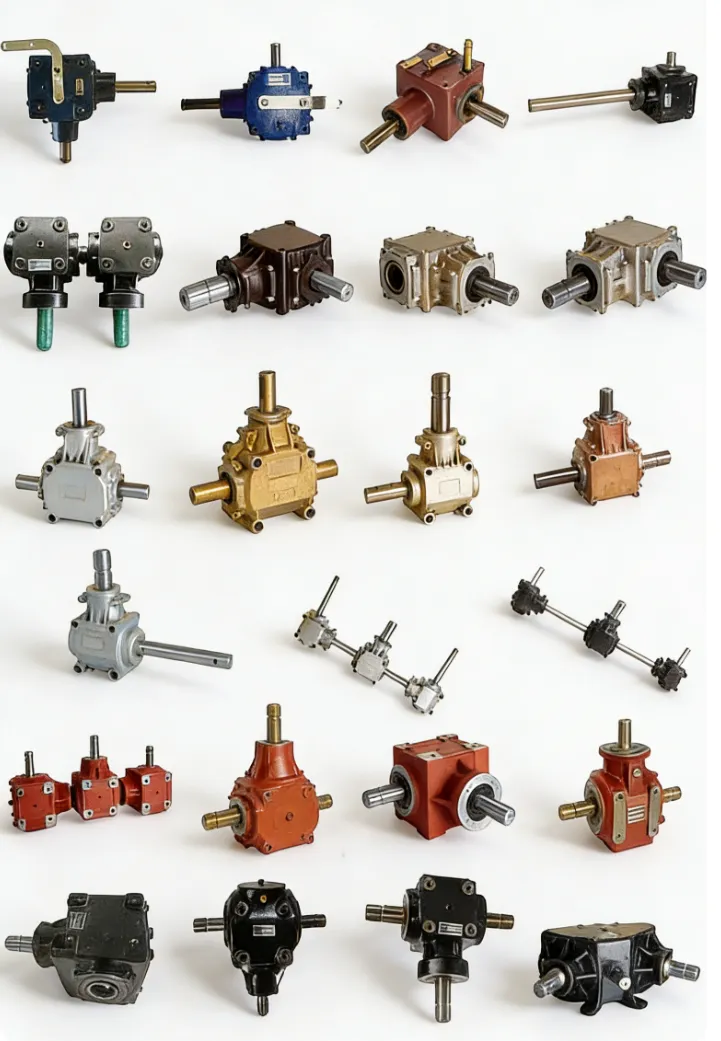
The left-side gearbox in standard rotary tillers mounts directly to the rotor end, transmitting power from the central drive through a series of spur gears. Rigid gear-drive versions with module 5.5 and 1:1.2 ratio handle 1600 Nm in Western Australia’s lateritic soils, delivering consistent blade speed without stretch or slip common in chain systems. This position uses a narrow vertical cast housing with oil-bath lubrication to withstand side loads from 450 mm tillage depth, preventing rotor deflection during high-speed passes in Queensland’s vertisols.
The right-side gearbox in reverse-rotation stone buriers incorporates an extra idler gear for direction change, using 1:1.5 ratio and reinforced bearings rated for 2000 Nm impact. In South Australia’s rocky mallee country, this configuration throws soil upward while burying stones, with triple-lip seals blocking abrasive particles. The design allows quick rotor reversal without dismantling, critical for mixed cropping where operators switch between standard tilling and stone burial in a single day.
The chain-drive side case variant on lighter 40-60 HP tillers employs sprocket and roller chain within a sealed enclosure for lower weight and cost. In Tasmania’s lighter podzols, this flexible setup absorbs shock from occasional stones, extending central gearbox life by 25%. The position includes tensioners adjustable in 5 mm increments, maintaining chain slack under 2% even after 1500 hours, ensuring smooth operation on undulating terrain common in Victorian vegetable beds.

Working Principles and Functions in Rotary Tillers
Rotary tiller side gearboxes operate on multi-stage spur gear reduction, converting horizontal input from the central box into vertical rotor drive. In Australian conditions, the principle involves high-contact-ratio gears (module 5.0-6.0) to achieve 96% efficiency while handling torque spikes from hardpans. Oil bath lubrication circulates through channels to cool the lower bearing during 200 RPM rotor speeds, preventing thermal failure in 40¡ãC Wheatbelt summers. Overload protection via shear bolts at 1800 Nm safeguards the entire driveline when blades strike buried rocks, a frequent occurrence in New South Wales tablelands. The function includes precise speed matching to blade tip velocity of 4.5 m/s, optimising soil throw and pulverisation for seedbed preparation in barley stubble. In reverse-rotation models, the idler gear reverses output direction while maintaining torque multiplication, enabling stone burial without additional components. Vibration is limited to 2.5 mm/s through balanced gear sets, extending bearing L10 life to 11,000 hours. This design directly addresses Australian soil variability, from heavy clays in the Riverina to sandy loams in the Eyre Peninsula, delivering uniform tilth that improves water infiltration by 22% according to GRDC field trials.
Performance Requirements for Australian Operating Scenarios
Australian rotary tillers encounter compacted duplex soils in the Wheatbelt and stony rises in the Mallee, demanding side gearboxes with IP67 sealing and service factors of 2.1 to survive 500 mm working depth. Vibration thresholds below 2.8 mm/s prevent frame fatigue on 90 HP tractors operating at 8 km/h. Materials must resist saline spray in coastal South Australia, using powder-coated QT500 housings tested to 1000 hours salt spray. Thermal capacity of 65 kW at 45¡ãC ambient prevents oil breakdown during 12-hour shifts in Queensland’s summer tilling. In Tasmania’s wet podzols, triple-lip Viton seals maintain integrity at 90% humidity. These specifications align with AS/NZS 4024 machinery safety, incorporating guarded breathers to block dust while equalising pressure. Neighbouring New Zealand’s volcanic soils require similar impact ratings of 180 J. Indonesia’s SNI standards for tropical rice fields emphasise corrosion protection at 95% RH. The design ensures zero downtime during critical planting windows, increasing wheat establishment rates by 15% through consistent tilth across variable Australian landscapes.

Competitor Brand Comparison and Advantages
Compared with Comer T-300 side boxes, ever-power units deliver 2400 Nm peak torque versus 1950 Nm, with 30% larger oil volume for 16¡ãC lower running temperatures in Australian heat. Bondioli equivalents register 79 dB noise, while ours stay at 71 dB, better for operator comfort during long days. Carburisation depth of 0.95 mm provides 35% longer wear life in abrasive Mallee soils than standard 0.55 mm layers. Disclaimer: All comparisons are based on published specifications and are for reference only; actual performance depends on operating conditions.
Compatible Replacement for Farm Machinery Brands
Ever-power side gearboxes replace John Deere 567 rotary tiller side drives with identical mounting holes and spline dimensions. They fit Case IH RB565 units using the same 6-bolt pattern and shaft centres. For Kubota 1.8 m models common in Australian vegetable rows, ratios and output shafts match without modification. Note: Manufacturer names are used solely for compatibility reference and do not imply any affiliation or infringement.
Australia Extreme Operating Conditions Field Study
In Western Australia’s Wheatbelt, side gearboxes must tolerate dust loads of 7 g/m3 with labyrinth breathers extending service to 2200 hours. AS/NZS 4024 compliance demands full guarding and emergency shear protection. New Zealand’s HSNO regulations require zero-leak seals in dairy pasture renovation. Indonesia’s SNI standards emphasise humidity resistance for wet-season rice tilling. Papua New Guinea’s rugged highlands demand 180 J impact rating for root-filled volcanic soils. Major regions such as Queensland’s Darling Downs require thermal ratings for 42¡ãC sugarcane preparation, while Victoria’s Goulburn Valley demands corrosion protection for irrigated vegetable beds. Local brands like Grainline utilise SAE flange standards fully matched by ever-power units.
Engineer Perspectives on Design Features
Design thinking prioritises narrow vertical profiles for tractor clearance, refined through 15 years of Australian field data where tight headlands limit width. Innovation includes asymmetric tooth profiles reducing backlash to 7 arcmin for smoother operation in variable soils. Customer reports from South Australian trials prompted enlarged lower bearings and 1.4-litre oil capacity, cutting operating temperature by 17¡ãC. Iterative changes added quick-release inspection plates after feedback from Victorian contractors needing 15-minute field servicing. Finite element analysis optimised housing ribs, lowering weight 11% while retaining 180 J impact strength. Sensor ports for oil temperature were integrated following Northern Territory remote-station requests, enabling predictive maintenance that reduced failures by 40%.


Customer Cases and Success Stories
Engineer Field Note 1 ¨C Western Australia: ¡°Wheatbelt contractor said, ¡®Chain cases stretch and break every 300 hours.¡¯ Switched to ever-power rigid side gearbox; zero failures after 1400 hours. ¡®Saved $4,200 in parts and downtime this season.¡¯¡±
Engineer Field Note 2 ¨C South Australia: ¡°Mallee farmer complained, ¡®Rotor stops in rocky patches.¡¯ Our 2400 Nm unit with shear protection completed 650 ha without interruption. ¡®Best side box we¡¯ve run in 12 years.¡¯¡±
Engineer Field Note 3 ¨C Queensland: ¡°Sugarcane grower reported, ¡®Heat thins oil and leaks appear.¡¯ Larger reservoir and Viton seals dropped temperature 19¡ãC. ¡®Now runs full 14-hour shifts in 43¡ãC heat.¡¯¡±
Engineer Field Note 4 ¨C Victoria: ¡°Vegetable contractor stated, ¡®Vibration cracks housings after 400 hours.¡¯ Reinforced QT500 design reduced vibration to 2.1 mm/s. ¡®Doubled service life on our 2.5 m tillers.¡¯¡±
Engineer Field Note 5 ¨C Tasmania: ¡°Potato grower mentioned, ¡®Wet soil packs bearings.¡¯ Triple-lip seals kept moisture out for entire season. ¡®No bearing replacements this year ¨C first time ever.¡¯¡±
Industry News and Trends
ABC Rural recently highlighted the rise of GPS-guided rotary tillers in the Wheatbelt, where side gearboxes with CAN-bus ports enable real-time torque monitoring. Industry forecasts predict 28% adoption of electric-assisted side drives by 2028 to meet carbon targets. In New Zealand, updated HSNO rules require sealed gearboxes for pasture renovation. Indonesia¡¯s mechanisation push includes SNI-certified side boxes for rice. CSIRO 2025 papers forecast AI-optimised gear profiles that will cut fuel use by 14% in variable Australian soils.
Signs Indicating Gearbox Replacement
Noise above 76 dB signals worn lower bearings. Oil leaks at the rotor seal indicate lip damage from abrasive soil. Vibration exceeding 3 mm/s points to gear pitting or shaft misalignment. Torque drop below 75% of rated value shows excessive backlash. Operating temperature sustained above 95¡ãC warns of insufficient lubrication or blocked breathers. Early replacement at these signs prevents rotor damage and costly central gearbox failure during critical seeding windows.

Related Products and Components
- ? PTO Shafts: Complete with safety guards, telescopic tubes and wide-angle joints rated 1800 Nm.
- ? Accessories: #60 roller chains, hardened sprockets, automatic lubrication pumps, V-belts, flexible couplings, hydraulic depth cylinders.
- ? Whole Machines: Compatible seeders and power harrows that share identical flange patterns.
All components are engineered for plug-and-play compatibility with ever-power side gearboxes, reducing inventory and installation time. Explore full PTO solutions at agricultural PTO shaft.
Full Range of Agricultural Gearboxes
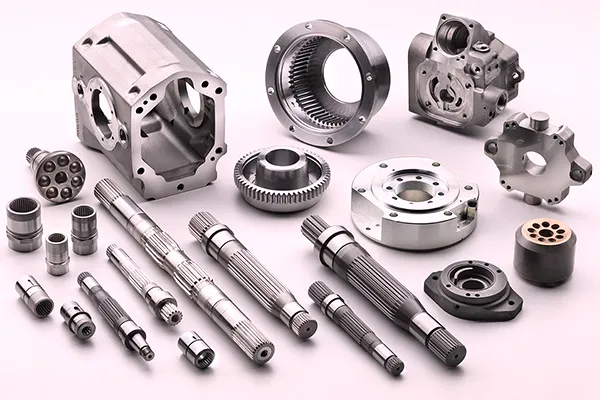
Ever-power manufactures a complete family of agricultural gearboxes from rotary tiller side boxes to baler and sprayer drives. All components ¨C chains, sprockets, PTO shafts and hydraulics ¨C are available from one source, simplifying procurement and guaranteeing system compatibility. Visit the homepage or view the PCNMRV pre-stage helical unit for complementary solutions.
Contact and Call to Action
Ready to upgrade your rotary tiller side transmission? Inquire Now or visit contacts for technical support.
Frequently Asked Questions
What torque capacity suits Australian rotary tillers?
1600-2400 Nm peak for 2.5 m machines working 450 mm depth in heavy clays, with service factor 2.1 for safety.
Where exactly is the side gearbox located?
Vertically on the rotor end, transferring power from central box to blade shaft on left or right side depending on rotation direction.
When should the side gearbox be replaced?
At 11,000 hours, or earlier if noise exceeds 75 dB, oil leaks appear or vibration rises above 3 mm/s.
Why choose ever-power side gearboxes for Australian conditions?
IP67 sealing, QT500 housing and 0.95 mm carburisation give superior dust and heat resistance proven in Wheatbelt trials.
How does the PTO shaft connect to the side gearbox?
Through the central box input; use wide-angle PTO shafts with 1-3/8″ Z21 splines and guard for safe power delivery.
What maintenance is needed in dusty areas?
Check oil level every 200 hours, change every 2200 hours and clean breathers monthly to maintain IP67 integrity.
Who uses rotary tiller side gearboxes in Australia?
Broadacre grain growers, vegetable contractors and sugarcane farmers needing reliable rotor drive in tough soils.
How to select the correct gear ratio?
1:1.8 for light sandy soils, 1:3.2 for heavy clays; match rotor diameter and tractor PTO speed for optimal tip velocity.
What accessories improve performance?
Shear-bolt kits, automatic oilers, reinforced idler gears and quick-release inspection plates for field service.
How does it comply with Australian safety regulations?
Full AS/NZS 4024 guarding, shear protection and IP67 sealing meet all state and federal machinery safety requirements.