Description
Technical Specifications
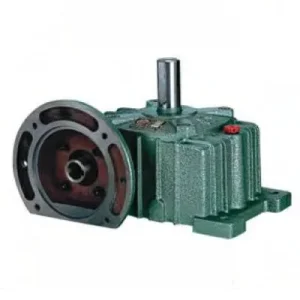
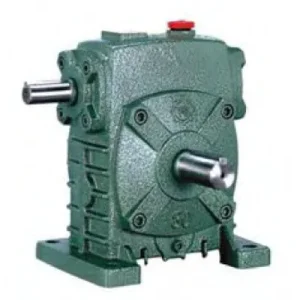
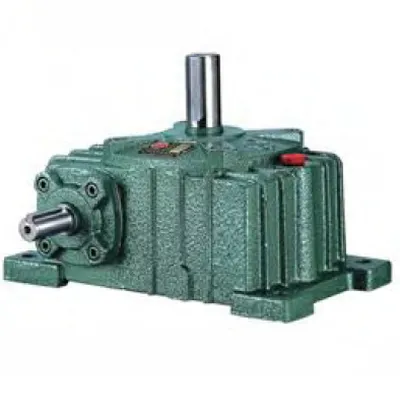
The WPO series worm gear reducer is the output-reinforced variant of the standard WP family. Its distinguishing feature is a heavy-duty output-shaft bearing arrangement using larger-bore taper roller or angular-contact ball bearing pairs that handle combined radial and axial loads significantly beyond the standard WP output bearing capacity. This makes the WPO the natural selection for any application where the driven machine connects directly to the output shaft without an additional shaft support bearing — a situation that imposes the full overhung load on the gearbox output bearing and requires it to be rated accordingly.
| Parameter | Range / Value | Notes |
|---|---|---|
| Frame Sizes | 40 – 200 | 11 standard sizes |
| Gear Ratio | 5:1 – 60:1 | Single stage |
| Output Bearing Type | Taper roller (heavy-duty) | Vs. standard deep-groove |
| Max. Overhung Load | Up to 2× standard WP rating | Size-dependent — see catalogue |
| Output Torque | Up to 2,400 N·m | Size 200 |
| Input Shaft | Solid keyed shaft | Standard WP input |
| Shaft Configuration | Right angle (90°) | Input/output perpendicular |
| Worm Material | 45# Steel, HT 56–62 HRC | Ground thread |
| Wheel Material | Tin Bronze ZCuSn10Pb1 | Conjugate profile |
| Housing | HT200 Cast Iron | Extended output bore section |
| Lubrication | Oil bath, ISO VG 220/320 | Shared sump with output bearing |
| Certifications | ISO 9001 / CE / SGS | Quality assured |
The Engineering Case for a Reinforced Output Bearing in Worm Drives
In the standard WPA or WPS design, the output shaft is supported by deep-groove ball bearings that are optimised for low friction and moderate combined loading. For many conveyor, mixer, and gate actuator applications, this bearing arrangement is entirely adequate. The problem arises in a specific but very common scenario: a chain sprocket, flat-belt pulley, or V-belt sheave mounted directly on the output shaft with no additional support bearing. In this configuration, every newton of belt or chain tension acts as a bending moment at the output bearing, stacking on top of the worm-wheel tooth load. Standard deep-groove bearings are not designed for sustained combined loading of this magnitude and fail progressively through fatigue spalling — typically between 3,000 and 8,000 hours in heavily loaded drives, rather than the 20,000+ hours achievable with appropriate bearing selection.
The WPO resolves this by replacing the standard output-side bearing pair with taper roller bearings. Taper rollers handle combined radial and axial loads through a shared contact mechanism, providing a rated combined load capacity approximately 1.8–2.2× higher than the equivalent deep-groove ball bearing for the same shaft diameter. This upgrade eliminates the standard practice of adding an external pillow-block bearing beside the gearbox output, saving machine designers the cost and complexity of a separate bearing housing, shaft extension, and alignment procedure.
Taper Roller Output Bearings
Handle combined radial plus axial loads at up to 2× the capacity of equivalent deep-groove bearings — the key specification for direct sprocket, sheave, or gear mounting.
Extended Output Bearing Span
Wider bearing separation along the output shaft reduces bending stress at each bearing, extending fatigue life beyond 30,000 hours in high-overhung applications.
Eliminates External Pillow Block
Removes the cost, weight, and alignment complexity of a separate outboard bearing housing — typically saving 2–3 hours of installation time per drive station on conveyor installations.
Identical Mounting to Standard WP
The WPO shares the WPA housing bolt pattern and output shaft dimensions, allowing direct substitution in existing designs where overhung load has been identified as the failure mode.
Understanding Output Shaft Load Mechanics in Worm Gear Applications
The output shaft of a right-angle worm gearbox carries three simultaneous load types: the torque transmitted to the driven machine (torsional load), the axial thrust generated by the worm wheel tooth geometry (axial load), and the overhung load imposed by any element mounted on the shaft extension (radial bending moment). Standard worm gear catalogue specifications always quote the maximum permissible output torque — but the overhung load limit is often listed separately or in fine print, and it is the overhung load that governs bearing life in the majority of chain-drive and belt-drive applications.
Calculating the Overhung Load on a Belt-Driven WPO
For a V-belt drive where the tight-side tension is T₁ and the slack-side tension is T₂, the resultant shaft force (overhung load) equals the vector sum of T₁ and T₂ — not the difference. At a typical V-belt drive efficiency of 95–97%, the ratio T₁/T₂ is approximately 4:1 to 6:1, so the overhung load is approximately 1.2 × T₁. For a 5 kW motor driving at 50 rpm output through a 200 mm pitch-circle diameter sheave, the overhung load can easily reach 2,400 N — comfortably within WPO bearing capacity for size 80 and above, but beyond the standard WP bearing rating for several frame sizes. This single calculation frequently drives the selection from standard WP to WPO.
Worm Gear Axial Load Interaction
The worm gear mesh generates an axial thrust on the output shaft (in the direction of the worm wheel axis) that must be reacted by the output shaft bearings. In a standard deep-groove bearing, axial thrust capacity is limited to approximately 10–15% of the static radial load rating. In the WPO’s taper roller bearing arrangement, the axial load capacity is approximately equal to the radial load capacity, meaning the full mesh-generated axial thrust is handled comfortably even when the output shaft simultaneously carries a large overhung load. This combined capability is the technical reason why the WPO avoids the premature bearing failure that standard WP units can experience in direct-drive chain or belt applications.
WPO Internal Components, Output Sub-Assembly & Related Drive Parts
The WPO retains the standard WP worm and wheel components while modifying the output-shaft bearing circuit. The component breakdown below identifies both the standard elements shared with the WPA and the WPO-specific upgrades:
Standard 45# Hardened Steel Worm (Shared with WPA)
The worm shaft in the WPO uses the identical 45# induction-hardened, thread-ground worm as the WPA equivalent frame size. This commonality means the worm shaft is a shared spare part between WPA and WPO installations — an important consideration for maintenance stores management when both product types are deployed on the same site.
Tin Bronze Worm Wheel (Shared with WPA)
The ZCuSn10Pb1 worm wheel is identically specified to the WPA equivalent — same alloy, same hobbing geometry, same quality standards. Wheel replacement procedures and parts ordering are identical between WPA and WPO for the same frame size, simplifying procurement across mixed-product installations.
Heavy-Duty Taper Roller Output Bearing Pair (WPO-Specific)
The output shaft runs in a preloaded matched taper roller bearing pair. The two bearings are mounted in an opposing-cup arrangement (X-arrangement), which shares both radial and axial loads between them while providing high stiffness against shaft deflection. Preload is set during assembly with a precision shim to achieve 5–10 µm axial play — verified with a dial gauge before the housing is closed and sealed.
Extended Housing Output Section (WPO-Specific)
To accommodate the larger taper roller bearing outer diameter and the increased bearing span, the WPO housing output bore section is extended compared to the WPA. The external bolt pattern and foot mounting dimensions remain identical to the WPA, but the axial length of the output-shaft housing boss is approximately 15–25 mm longer (size-dependent), which must be accounted for when determining minimum machine frame clearance at the output shaft end.
Heavy-Duty Double-Lip Output Seal
The output shaft lip seal is uprated compared to the WPA to handle the higher contact pressure generated by shaft deflection under maximum overhung load. The seal material uses a nitrile rubber compound (NBR) as standard, with fluoroelastomer (FKM) available for applications involving exposure to chemical solvents or operating temperatures above 100 °C.
Directly Mountable Drive Elements & Related Hardware
The WPO output shaft is dimensioned and shaft-tolerance-graded (k6 fit) for direct pressing of standard sprockets, timing pulleys, and spur gears without intermediate hubs — reducing drive-train component count. For agricultural and field machinery applications requiring integration with multi-direction drive trains, the WPO pairs naturally with standard agricultural machinery gearboxes as the primary speed reduction stage ahead of secondary field drive distribution.
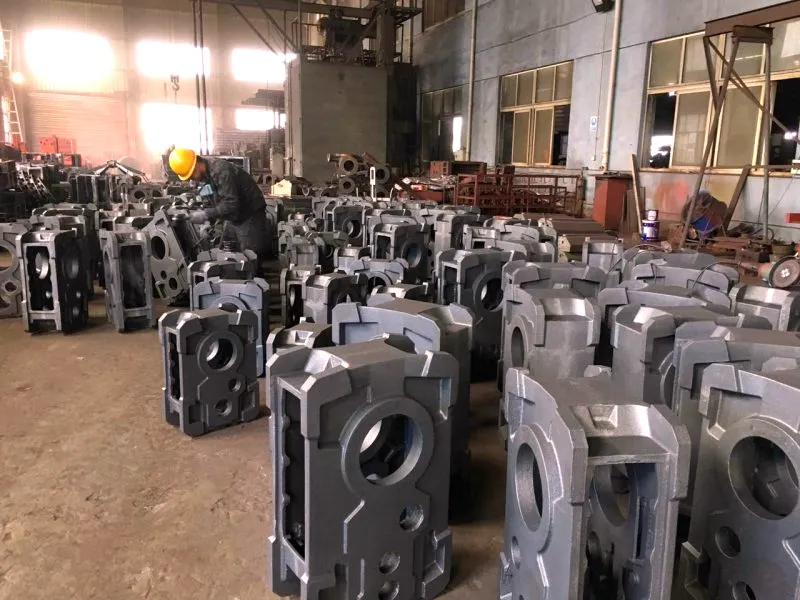
Industrial Applications Best Served by the WPO Right-Angle Worm Gearbox
The right angle worm gearbox architecture of the WPO is particularly well-matched to applications where belt, chain, or gear loads are applied directly to the output shaft, or where the driven machine’s own bearing arrangement is inadequate to fully support the combined load. Across Australian industry, the most frequent deployment environments include:
| Application | Drive Element | Why WPO Is Preferred |
|---|---|---|
| Screw conveyor head drives | Direct shaft coupling to conveyor screw | Screw deadweight creates large static overhung load |
| V-belt secondary drives | V-belt sheave on output shaft | Belt tension forces exceed standard WP bearing rating |
| Chain-driven conveyor drives | Roller chain sprocket on output shaft | Chain sag weight plus impact loads exceed standard bearings |
| Mixing paddle drives | Paddle shaft directly coupled | Paddle deadweight and fluid drag create bending moment at output |
| Agricultural spreader drives | Spreader disc or auger direct shaft | Impact loads from material ingestion during field operation |
| Open-gear ring drives | Spur pinion mounted on output shaft | Gear mesh forces act at large radius from output bearing — high bending moment |
When to Specify WPO Over Standard WPA: A Design Engineer’s Guide
The decision between WPA and WPO comes down to a single calculation: comparing the actual output shaft radial load (from belt tension, chain weight, or gear mesh force) against the WPA catalogue overhung load limit for the required frame size and application point. If the actual load exceeds 80% of the WPA limit, specifying WPO is the appropriate engineering decision — the incremental cost of the WPO over WPA is small relative to the cost of an unplanned bearing failure in service.
Always specify WPO when a sprocket or sheave mounts directly on the output shaft without an external outboard bearing. The overhung load will almost certainly exceed WPA limits for frame sizes above 60 in medium-to-heavy duty applications.
When the calculated overhung load at the mid-shaft position exceeds 70% of the WPA catalogue limit, specify WPO to maintain a minimum L10 bearing life of 20,000 hours at rated operating conditions.
If a WPA installation is experiencing output bearing failures in under 5,000 hours, the root cause is almost certainly overhung load exceedance. Replace with WPO of the same frame size — no other machine modifications are required.
When the worm gear mesh-generated axial thrust on the output shaft exceeds 15% of the WPA rated radial output bearing load, specify WPO. At 40:1 ratio and above, axial thrust from the mesh is significant enough to warrant WPO selection in all but the smallest frame sizes.
For overhung load calculations and frame selection confirmation, the product engineering team provides a free application review service — supply your motor power, required output speed, drive element type, and shaft arrangement and receive a written recommendation within one business day.
Procurement, Customisation & Technical Support for WPO Series
Standard WPO configurations across all 11 frame sizes and the full 5:1 to 60:1 ratio range are maintained in production inventory. Standard orders dispatch within 5–10 business days ex-works. For Australian buyers, freight to Eastern seaboard locations runs 7–12 days depending on route and customs clearance timing; West Coast lead times are slightly longer.
Custom specifications available include: extended output shaft lengths for wide-face sprockets, non-standard output bore diameters, flanged output housing for direct machine frame bolting, stainless steel output shaft material for corrosive environments, FKM seals as standard fitment for chemical duty, and non-standard keyway profiles to customer drawing. All custom orders include a first-article dimensional inspection report before series production. Contact the sales and engineering team with your application parameters for a rapid proposal.